
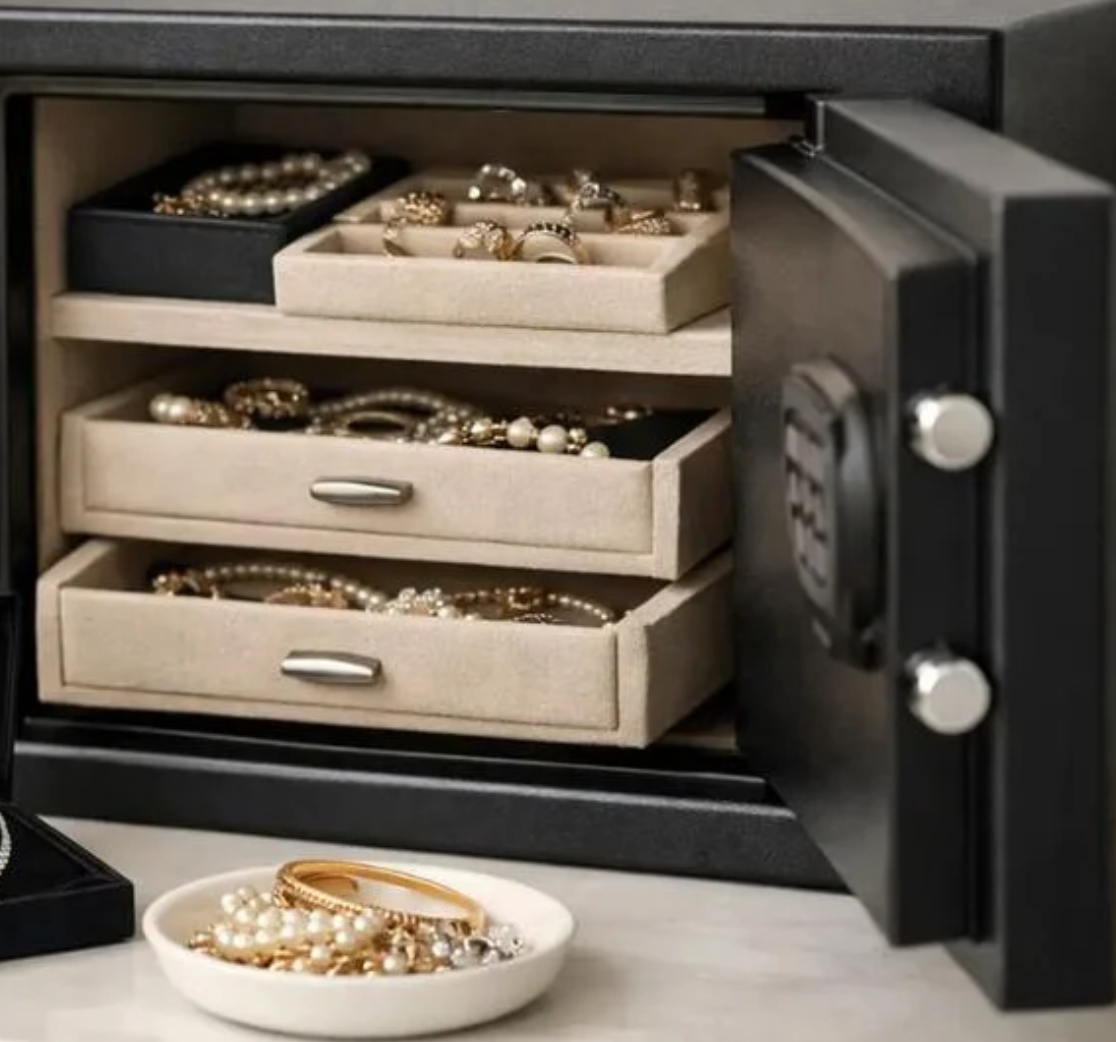
Unfortunately, regular storage solutions frequently fail to address the unique hazards that fine jewelry is subject to. Theft, fire, moisture, and accidental damage can threaten rings, watches, heirlooms, and gemstones. A standalone safe may offer a useful barrier, but its value depends on construction, placement, locking system, and resistance ratings.
Homeowners should assess those details alongside daily access needs. The right unit can protect valuables while keeping them organized, discreet, and ready for regular use without creating unnecessary inconvenience.
A quality unit should do more than hide valuables behind a locked door. Its body needs steel construction, hinges, a pry-resistant door, and a lock that suits the household. Interior drawers or compartments reduce scratches and tangles, while the footprint helps the safe remain discreet. For purpose-built options, secure jewelry safes for home storage present models with jewelry-focused layouts and protective features.
What a Standalone Safe Can Handle
A standalone safe can provide strong protection against common household threats. Its effectiveness begins with the shell, door thickness, hinge protection, and locking hardware. Burglary resistance depends on how well the unit withstands drilling, prying, and forced entry. Ratio testing and interior insulation are the two most important factors in fire safety.
Water resistance also deserves attention here. Fire suppression systems and burst pipes can damage jewelry, documents, and storage materials. Even with a rated safe, some items may still be vulnerable; after all, no container is foolproof. The product specifications should explain the level of protection that has been tested.
The Limits of Basic Placement
A strong safe loses value if thieves can remove it quickly. Though its weight helps, anchoring adds another barrier. Many standalone models can attach to a solid floor or wall, depending on their structure and installation requirements.
Placement should balance concealment, access, and building strength. A closet, dressing area, or private office may provide practical access. The chosen location should also support the safe’s weight and allow the door to open fully. Avoid damp areas, extreme heat, and visible positions near entrances.
Features That Matter for Fine Jewelry
Protection outside the compartment
A reliable locking system should also match the household’s habits. Electronic, biometric, and mechanical options each have their own benefits. Fingerprint access can speed up entry, while a mechanical lock avoids battery concerns. Backup access procedures should remain secure and available only to authorized users.
A tamper alarm can add another warning layer. Some models also include time-delay settings, audit records, or relocking functions. These features help households control access without relying on memory alone.
Care inside the compartment
Fine jewelry needs protection from contact as well as theft. Velvet-lined drawers, divided trays, and necklace hooks can prevent scratches, knots, and metal-to-metal friction. Separate spaces also make it easier to inspect pieces before wearing them.
Humidity control is extremely significant for watches, plated items, photographs, and other materials stored nearby. Silica gel can help in some settings, but it requires replacement and should not replace proper ventilation or safe maintenance. Jewelry should be clean and dry before storage.
Match the Safe to the Risk
Insurance requirements can influence the purchase more than appearance. Some policies expect certified burglary or fire ratings, while others set limits for specific categories of valuables. A UL or TL rating may help establish tested performance. TL-15 and TL-30 ratings refer to timed resistance against certain burglary tools under laboratory conditions.
Capacity also requires careful planning. A compact box may be ideal for a few pieces, but crowded drawers can cause damage and slow access. Measure the jewelry collection, allow room for future additions, and confirm the safe will fit its intended location.
A Standalone Safe Is One Security Layer
A safe protects valuables after someone reaches the home. It does not replace strong locks, monitored alarms, lighting, or sensible privacy habits. Jewelry should remain out of sight during viewings, repairs, gatherings, and routine household activity.
An inventory can strengthen recovery efforts after loss. Record clear photographs, purchase documents, appraisals, serial numbers, and current storage locations. Keep copies securely outside the home. Regularly check batteries, hinges, seals, and locking functions so the safe remains ready when needed.
Conclusion
A standalone safe can protect fine jewelry at home, provided its construction, rating, placement, and interior fit the household’s risks. Anchoring reduces removal threats, while certified fire and burglary performance supports stronger protection. Jewelry-friendly compartments help prevent everyday damage and maintain order.
Still, the safest approach combines secure storage with privacy, alarms, insurance records, and careful maintenance. Choosing a properly rated unit turns a simple locked container into a practical part of home security.
