
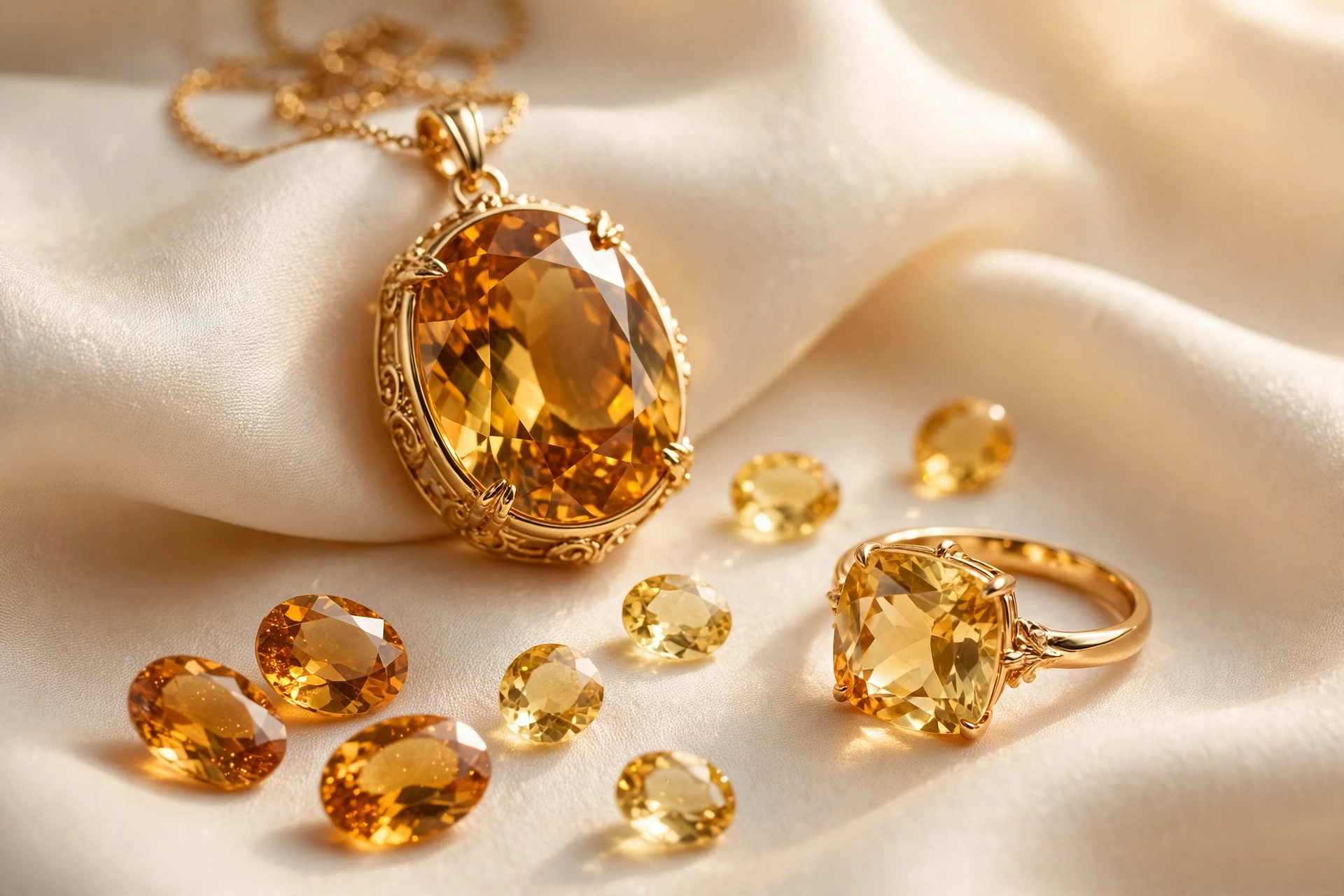
The colour of November birthstone is golden yellow to orange. November is one of the few months with two official birthstones, topaz and citrine, and both sit in the warm end of the spectrum. Picture a November jewel: honey, amber and burnt orange — warm tones from pale champagne to deep madeira.
That range confuses buyers: one shop calls a stone golden topaz, another calls the same colour citrine, a third shows a blue stone and still calls it November’s. This guide sorts it out — the real colour, which shades belong to each stone, why the month has two, and how to pick the right shade.
The Short Answer: What Colour Is the November Birthstone?
Golden yellow to orange — the short, official answer. Topaz ranges from yellow and golden to orange and pinkish orange; citrine from pale yellow to brownish orange. In American spelling the question is the color of stone for November, and the answer does not change.
The palette has named shades: champagne, honey, golden, imperial pink-orange, sherry and madeira. A pale lemon stone and a deep reddish-orange stone can both be correct; the difference is usually price, rarity and taste.
One mistake is worth clearing up early: blue topaz is real and popular, but on the official list it belongs to December, not November. For the traditional November colour, stay in the golden family.
Why November Has Two Birthstones
November has two birthstones because the list changed. The modern American list was set in 1912 with topaz as the only November stone; in 1952, jewellers added citrine. That update is why buyers can choose between two golden stones today.
The two were never meant to compete: topaz is the older, traditional stone — harder and rarer in its finest colours — while citrine is the modern companion, the golden variety of quartz, affordable even in large sizes. Either is correct for any November birthday.
Birthstones work by month: February’s purple stone shows the same idea — see our guide to the amethyst birthstone month.
The November Colour Palette, Shade by Shade
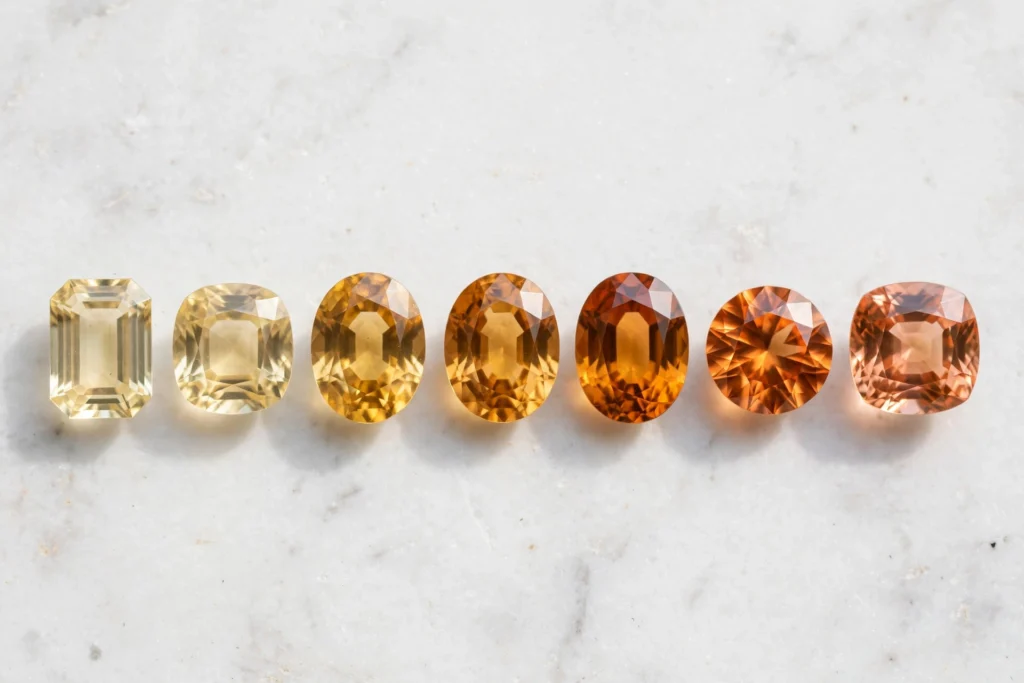
No two November stones look alike, and the trade names almost every step of the gradient, palest to deepest.
Pale champagne and lemon
The palest shades are champagne and lemon yellow, almost always citrine — soft, light yellow is the colour the earth produces most often. Champagne suits silver settings and understated tastes.
Honey and golden yellow
Honey and golden yellow are the heart of the November birthstone colour — the shade most people picture. Golden topaz here is the everyday classic; golden citrine the affordable version of the same look. If you want one safe answer, honey gold is it.
Orange and the orange birthstone
Deeper in, the colour turns frankly orange. An orange birthstone is still a November stone — citrine at its deepest, golden topaz at its richest — and it pairs beautifully with yellow gold and rose gold.
Imperial topaz: pinkish orange
The most prized November shade has its own name: imperial topaz, a golden orange to pinkish orange stone, finest pieces leaning toward orangy red — said to honour Russian royalty or Brazil’s emperor Pedro II. It is the shade collectors chase, at the highest prices in the family.
Sherry and madeira
At the deep end sit sherry and madeira — brownish orange tones named after fortified wines, usually citrine, the deepest often heat-treated amethyst. Rich and dramatic, they suit larger pendants and cocktail rings.
Topaz vs Citrine: Same Colour, Different Stones
Topaz and citrine look alike — citrine was even sold as gold topaz or Madeira topaz. But they are different minerals, and the differences matter when you buy and wear them.
Topaz is a silicate mineral rating 8 on the Mohs scale. It holds a bright polish for years, but one distinct cleavage direction means a sharp knock can split it — so topaz suits pendants and earrings best, and a topaz ring deserves a protective bezel. Citrine is quartz, rating 7, with good toughness and no cleavage weakness, so it handles daily rings comfortably.
| Topaz | Citrine | |
|---|---|---|
| Mineral | Topaz, its own species | Quartz, the golden variety |
| Hardness | 8 on the Mohs scale | 7 on the Mohs scale |
| Toughness | Poor, one cleavage direction | Good, no cleavage |
| November colours | Yellow, golden, orange, pinkish orange | Pale yellow to brownish orange |
| Price | Mid range; imperial shades premium | Accessible, even in large sizes |
| Best for | Pendants, earrings, occasion pieces | Rings, bracelets, everyday wear |
| Cleaning | Warm soapy water; no steam or ultrasonic | Warm soapy water; ultrasonic usually safe |
Fine citrine stays affordable even in generous sizes, while fine topaz — especially imperial — is rarer and costs more. Neither is more correct; the choice is budget and wear.
What Gemstone Is November? The Two Stones in Detail
Ask what gemstone is November and the answer is two stones, not one — sometimes typed backwards, as gem November, but the stone is the same either way.
Topaz, the traditional November gem
November topaz is the original November birthstone, carried in the 1912 list and valued for centuries before it. It occurs in many colours, but the November association belongs to its golden and imperial shades. Historically it was carried for strength and clear thinking, and as the November precious stone it has long been the month’s formal jewel for milestones.
Topaz’s range is wider than November’s: golden and yellow topaz are the classic look, while blue topaz sits on December’s side of the list. Almost all blue topaz is colourless topaz treated with irradiation and heat — permanent and standard, but a different story from November’s golden stone.
Citrine, the golden quartz
Citrine is the sunny yellow to brownish orange variety of quartz, coloured by trace iron in the crystal. For centuries it has been the merchant’s stone, kept for prosperity since the days of tills and cash boxes — an association with trade, abundance and confidence that still draws people today.
Most citrine starts life as amethyst: controlled heating turns the purple quartz golden, and that heat-treated citrine is genuine and stable — it should simply be disclosed. Natural, unheated citrine is comparatively rare and usually paler. A deep, saturated golden-orange stone is very likely heated amethyst — beautiful and legitimate, but worth knowing before you pay a natural-citrine price.
Is There a Date Split? Scorpio, Sagittarius and the November Birthdays
November birthdays fall under two zodiac signs — Scorpio to around 21 November, Sagittarius from 22 November — which makes people ask whether early-November babies get a different stone. The answer is no: there is no official date split, and anyone born in the month can wear either stone.
People look up the November 17 birthstone and the November 4 birthstone hoping for a day-by-day answer, but the list works by month, not by day. Both are Scorpio birthdays sharing the same two golden stones — pick by colour, budget and wear, not the date.
The Rarest November Birthstone
Which is the rarest birthstone in the November family? Among topaz, the rarest natural colour is the warm orange-pink of imperial topaz, especially pieces leaning toward orangy red — scarce, mainly from Brazil, and commanding the highest November prices.
Among citrine, the rare thing is a natural origin: most deep golden-orange citrine is heat-treated amethyst, and pale natural citrine is harder to find than vivid treated stones. Before buying, ask: is this topaz imperial, and is this citrine natural or heat-treated?
Buying a November Birthstone: How to Choose the Right Colour
Start with the shade, not the species
Decide the colour first: pale champagne for silver wearers; honey and golden as the safest all-round choice; deep madeira richer with yellow gold; imperial pink-orange for a significant birthday. No shade is wrong.
Know what you are paying for
Ask whether citrine is natural or heat-treated, and whether topaz is imperial or golden — heat-treated citrine is stable and legitimate, but should cost less than natural citrine of the same size. Dyed quartz and glass are the real traps: glass feels warmer, often shows bubbles, and lacks a real gem’s crisp facet edges. Our guide to how to tell if amethyst is real covers the same checks, and most work for citrine too, since citrine is also quartz.
Match the metal to the shade
Yellow gold deepens every November shade and is the traditional pairing. White gold and silver cool the golden tones for the palest champagne shades, while rose gold warms the pink-orange imperial shades. For silver, the metal needs care too — see our guide to cleaning silver jewellery at home.
Match the piece to the stone
Topaz belongs in pendants and earrings, where its hardness shines and its cleavage stays safe; citrine in rings and bracelets, where its toughness earns its keep. A topaz ring suits occasional wear or a protective bezel; a citrine ring suits every day. Size follows: citrine for a generous pendant, topaz for a single focused jewel.
How to Care for Golden Birthstones
Both November stones are easy to look after: warm water, mild soap and a soft brush, then a full dry. Soap film, not damage, is the usual reason a golden stone looks dull.
The shared caution is sunlight: long exposure can soften golden stones over months, so a drawer beats a sunny sill. Topaz needs its own caution — skip steam and ultrasonic cleaners, since vibration and temperature changes can exploit its single cleavage direction. Citrine is more forgiving, ultrasonic cleaning usually safe, though steam is still best avoided. Store pieces separately from harder stones, and take rings off for gym sessions and heavy chores.
November Birthstone Jewellery: Rings, Necklaces and Gifts by Budget
A November gift works best with the golden tone close to the skin — pendants, studs and tennis bracelets keep the stone visible and away from knocks.
On a modest budget, citrine is the generous choice: a pendant or substantial bracelet reads as a proper gift without a jeweller’s price, and a bracelet needs no ring sizing. In the middle range, golden topaz in a pendant marks the month with something that lasts decades. At the top end, imperial topaz is the heirloom — kept, worn on occasions, and eventually passed on.
November birthdays fall just before the winter holidays, so a gift often has to work twice. Citrine gives scale and warmth; topaz gives occasion and fire. Plenty of people end up with both: one worn daily, one kept for special days. And because the colour of the November birthstone is a warm golden range, two pieces in different shades sit happily in the same box.
Frequently Asked Questions
What color is the November birthstone?
The colour of November birthstone is golden yellow to orange: topaz from yellow and golden to orange and pinkish orange, citrine from pale yellow to brownish orange. For the classic look, choose warm yellow, honey or amber.
What gemstone is November?
November has two birthstones: topaz, the original 1912 stone, and citrine, added in 1952. Either is correct for any November birthday — topaz is the harder, more traditional stone; citrine the affordable golden quartz for everyday wear.
Is blue topaz a November birthstone?
Not on the official list — blue topaz is a December birthstone, most of it colourless topaz treated with irradiation and heat. For a traditional November piece, choose yellow, golden or orange topaz, or citrine.
What is the rarest November birthstone?
Imperial topaz in orangy red to pinkish orange is the rarest and most prized November shade. Natural, unheated citrine is also genuinely rare — most deep golden citrine sold today is heat-treated amethyst.
Which November birthstone should I choose, topaz or citrine?
Choose on colour and format. Citrine gives a generous size at a friendly price and wears comfortably every day, especially in rings and bracelets. Topaz offers more fire and a wider palette — the better choice for a single birthday piece, ideally a pendant or earrings.
