
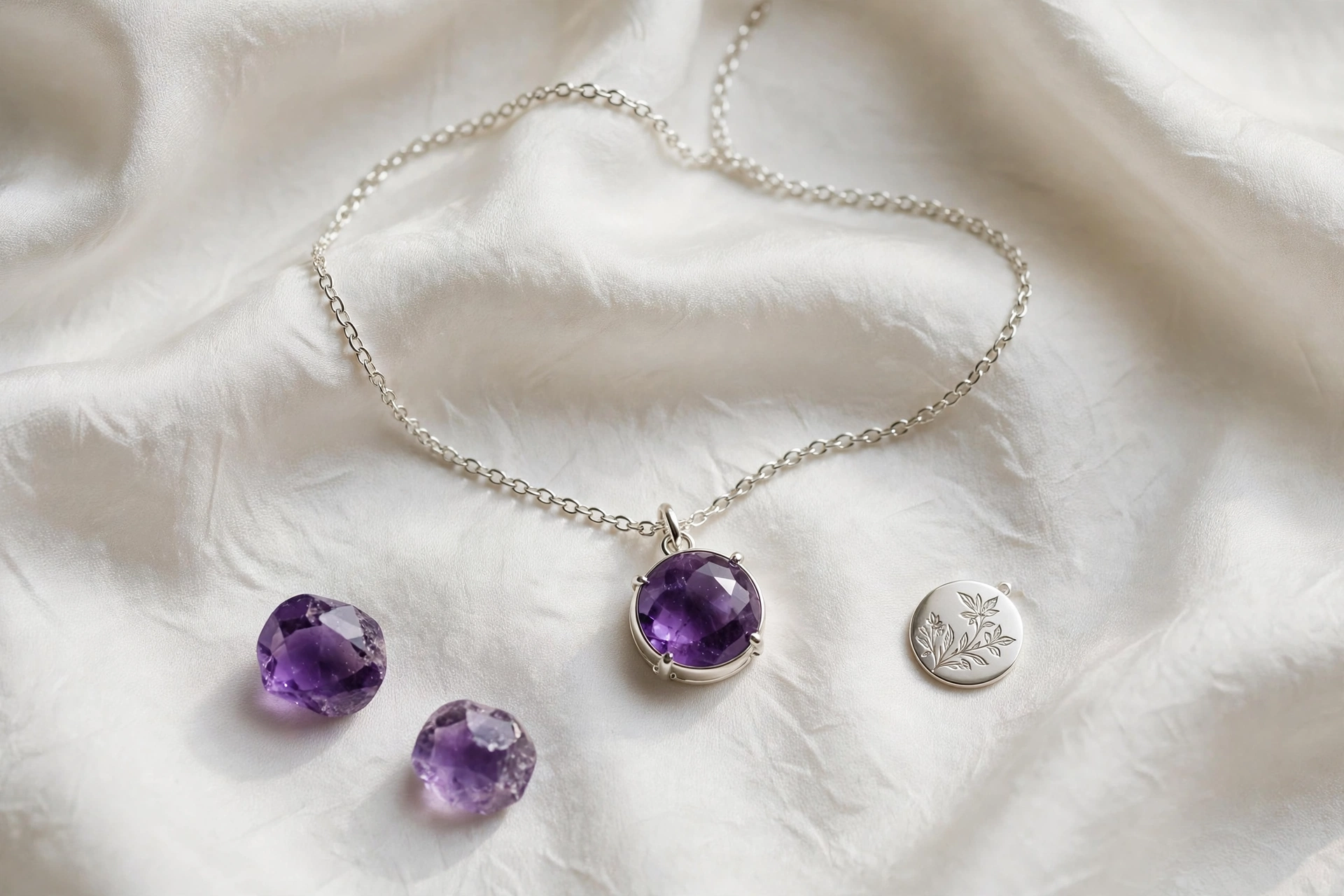
A sterling silver birthstone necklace is the most-bought piece of personalized birthstone jewelry for a simple reason: it carries a story without saying a word. One small stone marks a birthday, a child or an anniversary, and silver keeps the price within reach. But not every necklace sold under that name is worth your money. Some stones are glass and some chains are plated brass. This guide explains how to choose a real one, what it should cost, and how to keep it bright.
What Makes a Birthstone Necklace Personal?
Personalized birthstone jewelry becomes personal in three ways, and the best pieces combine at least two. The first is the stone itself: the gem tied to a birth month, chosen for one person or for several at once. The second is engraving — a name, a date, initials or a short phrase cut into a disc, a bar or the back of the pendant. The third is the design itself.
A single-stone birthstone pendant is the classic birthday gift. A two-stone piece suits a couple, marking two birth months side by side. A family birthstone necklace with three, four or five stones — one for each child — is the version most often bought for mothers and grandmothers.
Sterling Silver vs Gold: Which Metal Suits a Birthstone Necklace?
Silver is the natural partner for a birthstone pendant necklace, but it is not the only option. The right metal depends on how often the necklace will be worn, how sensitive the wearer’s skin is, and what you are willing to spend. Sterling silver — stamped 925, meaning 92.5% pure silver — is bright, affordable and easy for a jeweller to repair. Solid gold costs far more but never tarnishes.
| Metal | Typical price | Everyday durability | Care needed | Best for |
|---|---|---|---|---|
| Sterling silver (925) | $30–$120 | Good; soft, can scratch | Polish cloth, dry storage | Everyday birthstone necklaces |
| Gold-filled | $60–$180 | Very good; thick gold layer | Gentle cleaning only | Sensitive skin, daily wear |
| Solid 14k gold | $250–$800+ | Excellent; no tarnish | Occasional polish | Milestone gifts, heirlooms |
| Gold-plated brass | $20–$60 | Weak; plating wears off | Keep dry, avoid perfume | Occasional wear, tight budgets |
For most buyers, a silver birthstone necklace in genuine 925 sterling silver is the sweet spot: real silver, a real stone, and a price that leaves room for engraving. Birthstone jewellery gold pieces are usually bought for milestones, such as a 21st birthday or a fiftieth anniversary, when you want the piece to last decades. Avoid plated pieces for daily wear: the thin coating rubs off at the clasp and pendant edges within months, and no polish brings it back.
Real Birthstone vs Glass, Dyed Quartz and Synthetics
The stone is where most disappointment hides. A real birthstone necklace should contain a natural or lab-created gemstone of the correct mineral — amethyst for February, sapphire for September, and so on. What many cheap listings actually contain is glass, dyed quartz, or a synthetic stone that looks right in a photo and wrong in person. Glass often shows tiny round bubbles under a loupe; dyed quartz has colour pooling in cracks. Lab-created stones are real in a chemical sense — a lab-grown sapphire is sapphire — but they should be labelled as such and priced lower than natural stones.
Before you buy, ask the seller three questions: what mineral is the stone, is it natural or lab-created, and is the colour natural or treated? A trustworthy seller answers all three plainly. If the listing says only “birthstone crystal” with no mineral name, walk away. For February’s stone, our guide to how to tell a real birthstone from glass or dyed quartz shows seven checks you can do at home, from the temperature test to looking for dye lines.
Choosing the Right Birthstone Pendant
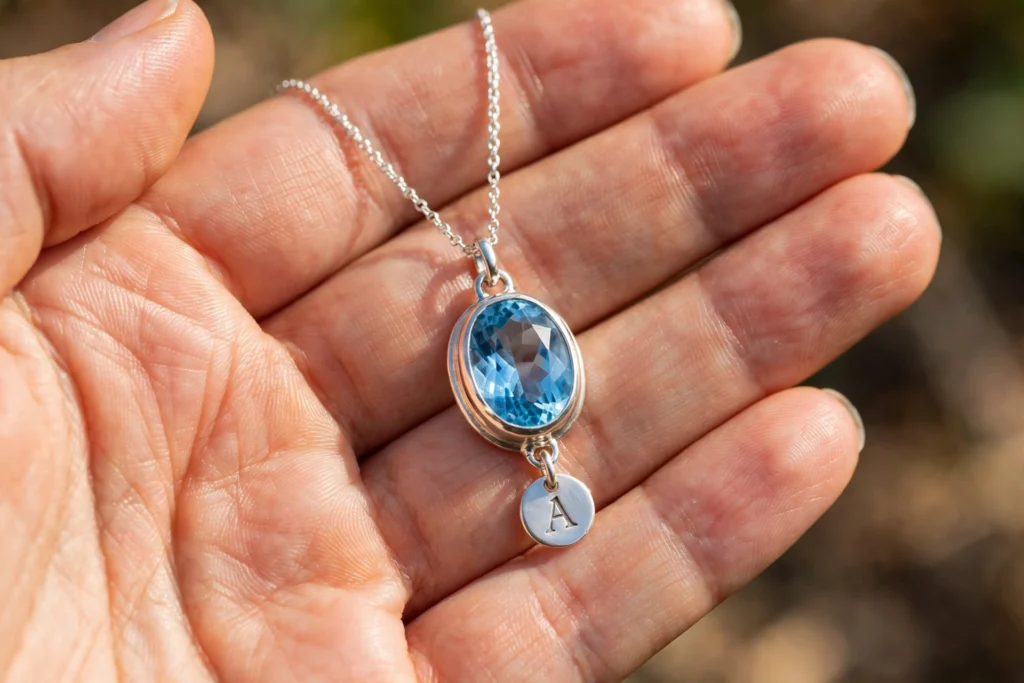
The pendant is the face of the necklace, and its setting decides both the look and how safe the stone is. A bezel setting wraps a thin rim of metal around the stone, protecting its edges — the best choice for softer stones such as opal, pearl and turquoise, and for necklaces worn every day. A prong setting lifts the stone up so light passes through it, which makes faceted stones such as sapphire, topaz and garnet sparkle more, but leaves the corners exposed.
Shape matters too. Round and oval cuts suit almost every stone and every age. A teardrop pendant reads more formal, a heart suits romantic gifts, and a raw or rough-cut stone gives a relaxed, bohemian feel. For a gift, a bezel-set round stone is the safest all-rounder: durable, easy to wear with anything, and hard to get wrong.
Birthstones by Month at a Glance
Every month has its stone, and a few months have two. Knowing the correct pairing is the first step to a piece that feels right.
| Month | Birthstone | Colour |
|---|---|---|
| January | Garnet | Deep red |
| February | Amethyst | Purple |
| March | Aquamarine | Pale blue |
| April | Diamond | Colourless |
| May | Emerald | Green |
| June | Pearl, moonstone or alexandrite | White, blue shimmer, colour-change |
| July | Ruby | Red |
| August | Peridot | Olive green |
| September | Sapphire | Blue |
| October | Opal or pink tourmaline | Rainbow flash, pink |
| November | Topaz or citrine | Golden yellow to orange |
| December | Tanzanite, zircon or turquoise | Blue-violet, blue, sky blue |
Two months deserve a second look. February’s amethyst is the most popular birthstone in personalised jewellery because its purple suits both silver and gold — our amethyst birthstone month guide explains its shades, meanings and care in full. November is trickiest: natural citrine is rare, and much sold as citrine is heat-treated amethyst — ask which stone it holds.
How Many Stones? One, Two or a Whole Family
One stone is the cleanest design and the easiest to wear daily. It suits a birthday gift for yourself or for one person, and it keeps the pendant small and light. Two stones work beautifully for couples — two birth months in one pendant, often set side by side or on a bar. They are also the classic birthstone necklace for girlfriend gifting, where the pair can represent the two of you without a single word engraved.
Three or more stones turn the necklace into a family piece. Mothers’ necklaces usually carry one stone per child, sometimes with a small engraved name beside each. Five is the practical limit for a pendant that still looks elegant; beyond that, a bar design or a charm-style necklace with separate small pendants works better.
Engraving Ideas That Actually Mean Something
Engraving is what turns a pretty necklace into a keepsake, but a bad engraving is worse than none. Short beats clever: a name, a date in numbers, initials, or two or three words that only the wearer understands. “Mum, always” outlasts a long quote nobody can read at 3mm high. Dates work best in the format the wearer uses — 14.06.2024 or Jun 14, 2024 — and Roman numerals suit anniversaries.
Before ordering, check the character limit — most pendants take 10 to 20 characters per line — and ask whether the engraving is cut into the metal or printed on the surface. Cut engraving lasts as long as the piece; surface printing can wear off. Confirm the spelling twice, including accents and capitalisation, because an engraved mistake cannot be undone.
What a Sterling Silver Birthstone Necklace Should Cost
A fair price for a sterling silver birthstone necklace with a genuine stone runs from about $30 for a simple solitaire pendant on a fine chain to about $120 for a larger stone, a halo setting or multiple stones with engraving. Solid gold versions of the same designs start around $250 and climb quickly with stone size.
What drives the price is the stone first and the metal second. A natural sapphire or emerald costs far more than a natural amethyst or garnet of the same size, and a large stone costs more than a small one. Engraving usually adds $10 to $30, and a longer or thicker chain adds a little more. Be cautious of prices that look too good: a $15 “sterling silver” necklace with a “genuine sapphire” is almost certainly plated brass with glass. Check for the 925 hallmark, read the returns policy, and compare the same design across two or three sellers before buying.
Caring for Your Necklace So It Stays Bright
Sterling silver tarnishes — that is normal, and it is not damage. Air, moisture and perfume slowly darken the surface, but a silver polishing cloth brings the shine back in a minute. For a deeper clean, warm water with a drop of mild soap and a soft brush is enough; our guide to how to clean silver jewelry at home covers the safe methods step by step, including the baking-soda foil bath for badly tarnished pieces.
Storage matters as much as cleaning. Keep the necklace in a dry pouch or a lined jewellery box, away from other pieces so the chain does not tangle and the pendant does not scratch. Take it off before swimming, showering or exercising: chlorine and sweat speed up tarnish, and a caught chain can snap. Treated this way, a necklace will look new for years, and a quick polish before a special occasion is all it needs.
What to Ask Before You Order
A good seller welcomes questions, so treat the answers as a test. Ask whether the metal is stamped 925 and whether the stone is natural, lab-created or simulated. Ask what the colour treatment is, if any, and whether the stone’s hardness suits everyday wear — a soft stone in a prong setting is a chip waiting to happen. Ask how long a made-to-order piece takes, what the engraving policy is, and whether an engraved necklace can be returned.
If you are buying birthstone jewelry for women as a gift, one more question matters: does the seller ship in gift packaging, and can they include a note? A necklace that arrives in a plain mailer with no box loses half its charm as a present.
Frequently Asked Questions
Is a sterling silver birthstone necklace good for everyday wear?
Yes, for most stones. Sterling silver itself is fine for daily wear if you accept light tarnish and a polish now and then. The stone matters more: hard stones such as sapphire, topaz, garnet and amethyst cope well, while pearl, opal and turquoise are better saved for occasions.
How can I tell if the birthstone in my necklace is real?
Start with the seller’s description: it should name the mineral and say whether the stone is natural or lab-created. At home, a real stone feels cool to the touch and warms slowly, while glass warms quickly. Look for tiny bubbles (glass) or colour pooling in cracks (dyed quartz) with a magnifier.
Can I put two or more birthstones on one necklace?
Yes — two-stone and multi-stone designs are among the most popular forms of personalized birthstone jewelry. Couples choose two stones, families choose one per child, and bar pendants or halo designs hold several stones neatly.
Will my sterling silver birthstone necklace tarnish?
Yes, eventually. All sterling silver darkens with exposure to air and moisture, but tarnish is surface-only and reverses with a polishing cloth or a gentle soap wash.
What should I engrave on a birthstone necklace for my girlfriend?
Keep it short and private: her initial and yours, the date you met, or two or three words that mean something to both of you. Avoid long quotes that will not fit or read clearly at small sizes.
