
Forty-two. That’s how many t-shirt listings were sitting in the category this week, and if you’ve ever tried to scroll all of them in one go you already know how it ends — somewhere around the twentieth black tee your eyes glaze over and you start opening things you’d clicked ten minutes earlier. The catalogue at Essentials Canada isn’t badly built, to be fair. It’s that forty-two of anything sits well past the point where a person keeps things straight, so what you’re really doing is whittling it to four or so, picking one of those, and closing the laptop before the second-guessing sets in.
Forty-two listings, nowhere near forty-two decisions
Look at what the number’s made of, though. A fair few of those listings are one shirt in another colour — same cut, different dye — so the decision underneath isn’t anything like 42 branches wide. Pick a cut. Pick a colour. That’s basically it.
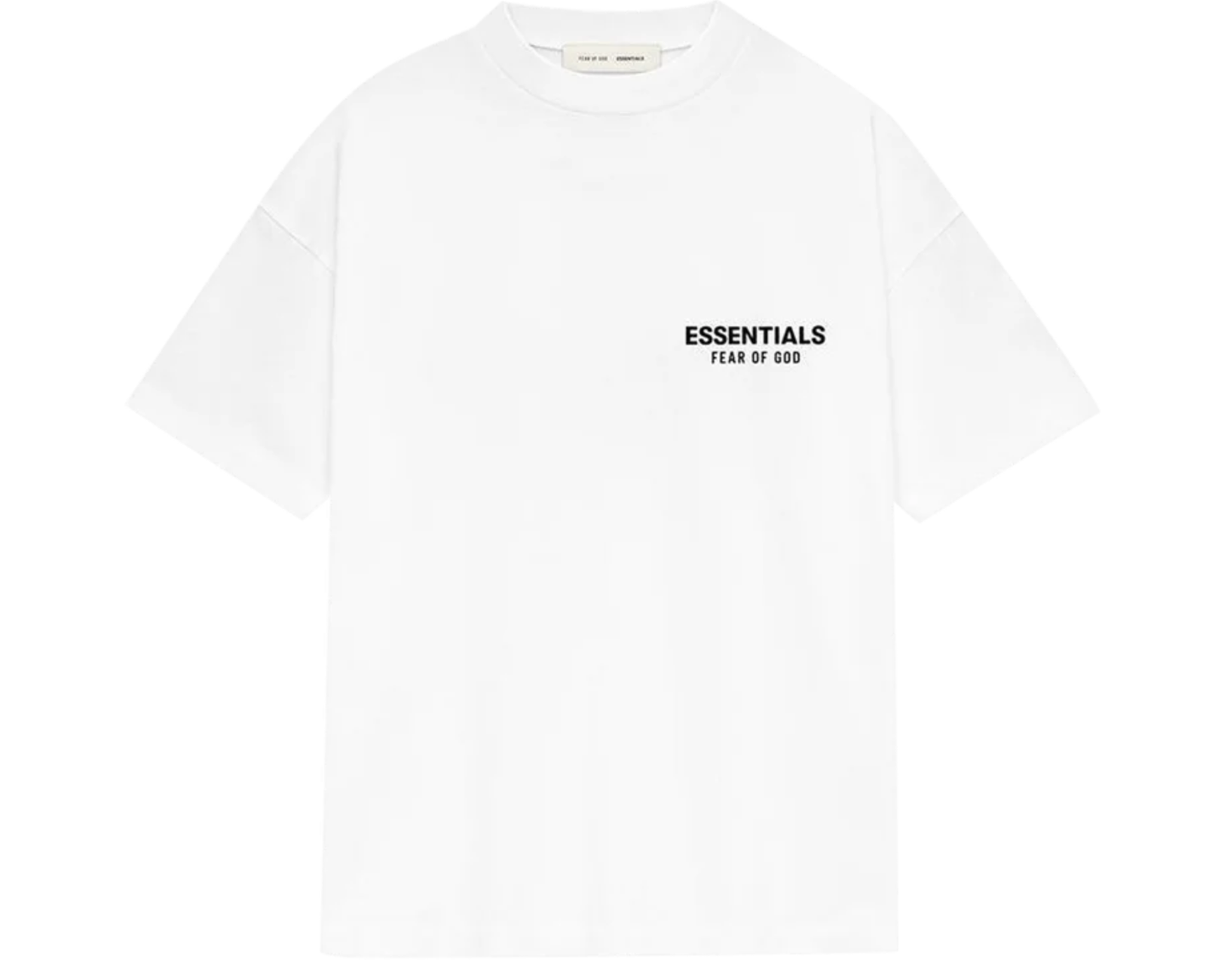
The Fear Of God Essentials Black T shirt comes in at C$110, and the 1977 Essentials T shirt sits in the same price band, so the first fork in the road is a plain chest logo versus the 1977 graphic — and choosing between those two quietly deletes something like half the page before you’ve read a single product description. I’d make that call first, every time, because it’s the only choice on the page that’s about taste rather than arithmetic.
Then colour, which in a Canadian winter is less about fashion than about how often you want to do laundry. Cream and light grey read beautifully in photographs and show everything — coffee, road salt, the grey rim that sweat leaves along a collar after a week of streetcars and overheated offices. Black and jet black hide all of it and go eight or nine wears between washes without announcing themselves. If this is your first tee from the category rather than your fourth, I’d start dark and get adventurous later.
The first page isn’t the best page
This is where most people lose the thread. You land on a category, look at the top nine or twelve products, form an opinion about the whole range from those, and buy out of that tiny sample. With 42 items that’s a quarter of the shelf deciding for you.
Sort order isn’t a recommendation
Whatever appears first is first for a reason that has nothing to do with you. Popularity sorting tells you what other people bought, which is a crowd and not advice, and newest-first only tells you when somebody uploaded a photograph. Neither one knows your size, or how often you can be, bothered doing laundry. The back pages are worth a minute precisely because nobody goes there; shirts end up stranded behind a flat product photo, and a flat photo has never once affected how a shirt fits.
What a crossed-out C$340 does to your brain
Every row runs the same play — C$110 with a C$340 struck through it, call it 68 per cent off. First time you see that, it does feel like a reason to buy. By the fifth row it ought to read as wallpaper, because a discount that’s identical right across the category has stopped telling you anything about which shirt is better value than its neighbour.
So compare the tees against each other. Not against a price none of them are charging any more.
Filters that narrow it, and one that doesn’t
Four moves, in this order, and the pile gets manageable fast:
- Filter to your size before you look at anything else, because a shirt that doesn’t exist in your size is, noise dressed up as an option
- Cut the colours down to two families and refuse to reopen that decision later
- Treat price as a ceiling you’ve set rather than a target you’re trying to hit
- Ignore newest-first sorting entirely — it ranks upload dates, and you’re not buying an upload date
Run those four and the 42 listings in the Essentials Hoodie category usually collapse to something like five or six shirts you’d genuinely wear. Which is a number you can hold in your head. Four tabs open, maybe five — past six the shirts blend into one another and you’ll re-read the same page twice without noticing.
| Key TakeawaysMost of the 42 listings are colour variants, so the real choice is cut first, then colourEverything on the shelf carries a similar markdown, so the crossed-out price can’t tell you which shirt is the better buySort order reflects upload dates and other shoppers, not your size or your wardrobeDark colours survive more wears between washes than cream or light greyFour tabs is a decision; twelve tabs is a hobby |
|---|
Knowing when to stop
Here’s the part nobody puts in a buying guide. Comparison has a point where it turns negative, and on a C$110 shirt that point arrives early — somewhere in the second half hour, when you’ve begun inventing differences between two black tees that are, in every way that matters, the same black tee. The decision isn’t getting better at that stage. It’s just getting longer.
What lets you stop early is the return window, honestly. You’ve got thirty days from the purchase to change your mind, which is the real safety net under a size guess — but it only works if you treat it properly. A Return Authorization number has to be, asked for before anything goes in a box, and a parcel that shows up without one gets turned away at the door. The shirt has to come back the way it arrived, too — no wash cycle, tags still hanging off it. Try it on, decide, then cut the tags. Or don’t.
Refunds
Take five to ten business days to land back on whatever you paid with, and the postage you paid in the first place stays spent. If something turns up damaged or it’s simply not the shirt you ordered, say so inside a week of delivery and the return cost shifts to the store instead of you.
One more trap, and it catches people on exactly this category. Shipping gets worked out at the checkout from weight, box size and where you live, and the store has run free standard shipping above a spend of around C$75 — which sounds like a reason to add a second tee, except a second tee is another C$110 and the postage you were dodging was a fraction of that. Buy one shirt because you want that shirt. Not to beat a shipping calculator.
Forty-two listings sounds like a research project and it really isn’t. Cut, colour, size, a ceiling on the price — four quick calls, and then the hardest bit, which is believing the fifth shirt you looked at was fine and closing the other tabs.
