
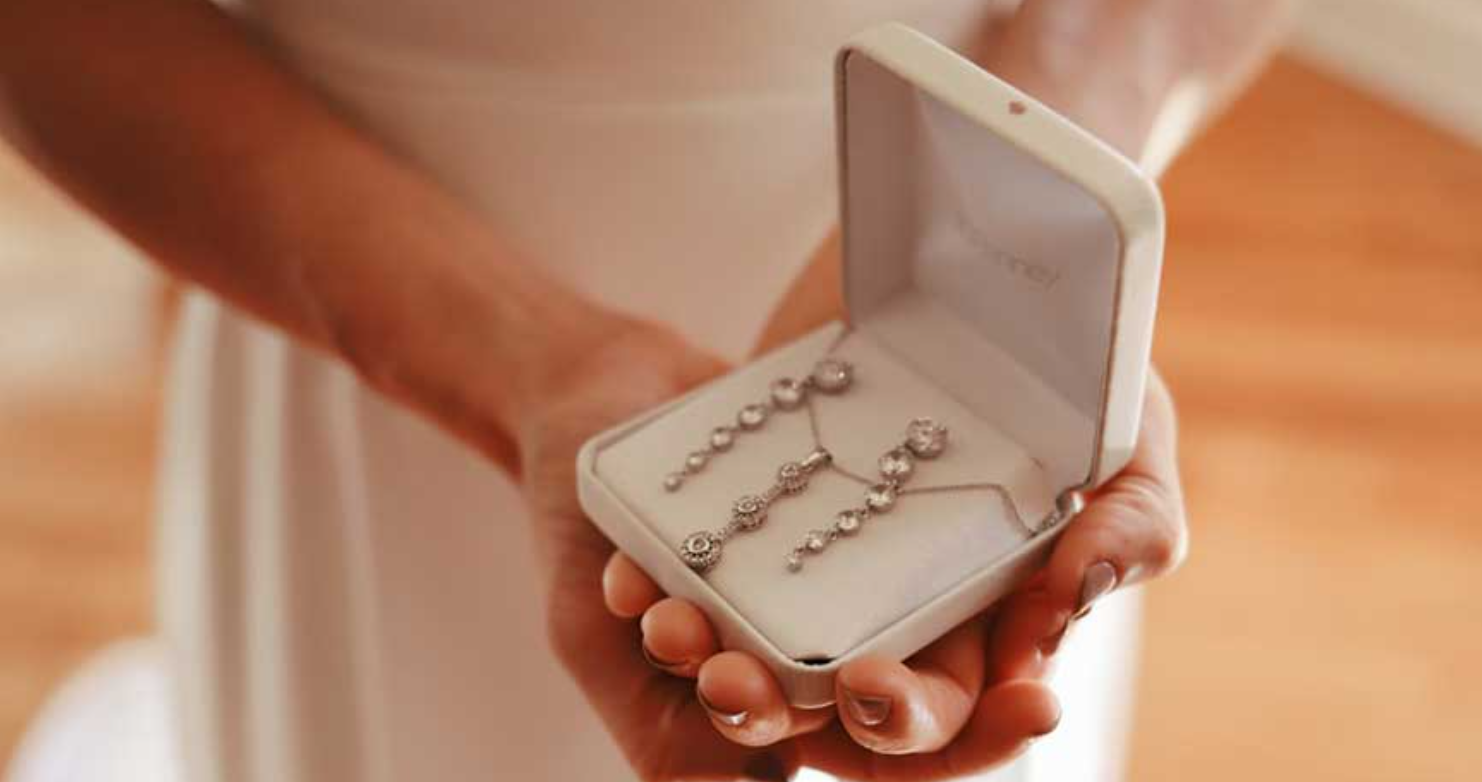
There was a time when bridal jewellery followed a predictable formula. A solitaire engagement ring, a polished gold band, perhaps a pair of pearl earrings handed down through the family. Elegant, certainly, but often chosen more from expectation than instinct.
Now, couples are approaching wedding style differently. Personal taste sits at the centre of every decision, from the venue to the tablescape and, increasingly, the jewellery itself. Rather than selecting pieces simply because they look “bridal”, many people are choosing rings and accessories that fit seamlessly into their everyday wardrobe and reflect the life they already live. That shift has made the search for meaningful jewellery far more interesting.
Why Modern Couples Are Rethinking Traditional Wedding Jewellery
The most stylish weddings rarely feel overworked. They carry a sense of ease that comes from thoughtful choices rather than excessive detail. Jewellery is no exception.
Instead of viewing wedding rings as a standalone purchase, couples are beginning to think about how these pieces will sit alongside existing jewellery collections, personal style preferences and daily routines. A ring should feel as natural at a Sunday coffee run as it does during the ceremony itself.
This approach has opened the door to more individual styling choices. Mixed metals are becoming increasingly common, with yellow gold paired against platinum or rose gold stacked beside white gold. Textured finishes, softer silhouettes and sculptural bands are replacing ultra-polished traditional designs.
There is also growing appreciation for understated luxury. Rather than chasing trend-led sparkle, many couples are investing in craftsmanship, subtle detailing and timeless proportions. The result feels less performative and far more personal.
Jewellery That Works Beyond the Wedding Day
One of the strongest shifts in bridal style is practicality. Couples want jewellery they will genuinely wear for decades, not pieces reserved for formal occasions.
This has influenced everything from the thickness of wedding bands to the stones being selected. Clean lines, low settings and minimalist silhouettes continue to resonate because they transition effortlessly into daily life.
Fashion has undoubtedly played a role here. Contemporary bridal wardrobes now lean towards versatility. Brides are pairing tailored separates with cathedral veils, wearing silk slip dresses for evening receptions and changing into structured mini dresses for after-parties. Jewellery has followed the same path.
Instead of heavily embellished statement pieces, there is growing interest in refined accessories that complement rather than dominate. Delicate diamond bands, brushed gold finishes and softly rounded profiles feel modern precisely because they avoid excess.
Even among couples choosing more traditional ceremonies, there is still a desire for individuality. Some are incorporating vintage-inspired details, while others opt for unusual shapes or asymmetric stone settings that subtly challenge convention. The beauty lies in the balance. For those looking to create a distinctive ring, exploring loose diamonds from Whiteflash can offer flexibility when choosing a stone that complements a unique setting and personal style.
The Return of Heirloom Thinking
Perhaps the most meaningful trend in wedding jewellery is the renewed focus on longevity.
People are increasingly drawn to pieces that feel emotionally significant, not simply fashionable. Jewellery that carries a sense of permanence naturally resonates during a life milestone as personal as marriage. Heirloom thinking does not necessarily mean antique rings or inherited diamonds, although both remain popular. More often, it reflects a mindset.
Couples are asking different questions before buying. Will this still feel relevant in twenty years? Does it reflect our style beyond the wedding itself? Could it eventually be passed down? This perspective has encouraged a move away from impulsive trend-buying and towards considered investment pieces.
Vintage aesthetics continue to influence contemporary designs because they carry an inherent sense of romance. Art Deco geometry, old-cut diamonds and engraved detailing all evoke a feeling of history without appearing costume-like. At the same time, modern jewellers are balancing nostalgia with cleaner, more wearable shapes. The combination feels polished rather than overly sentimental.
Why Simplicity Often Feels More Luxurious
The most memorable bridal looks are often the quietest. Minimalism has become less about austerity and more about confidence. Couples no longer feel pressure to prove formality through embellishment. Instead, there is elegance in restraint.
This is especially true when it comes to rings. A perfectly proportioned gold band or slim diamond eternity ring can feel infinitely more sophisticated than an oversized design chosen purely for impact.
That understated approach mirrors broader fashion movements. Across luxury fashion and interiors, people are gravitating towards timeless design over fast-moving trends. Wedding style is reflecting the same cultural mood.
There is also practical appeal. Simpler rings tend to integrate effortlessly into everyday wardrobes. They complement existing jewellery, suit changing personal style and remain wearable across different stages of life.
None of this means dramatic jewellery has disappeared entirely. Statement rings, coloured gemstones and layered bands still have their place. The difference is that modern couples are selecting these styles because they genuinely connect with them, not because tradition dictates it. Authenticity has become the defining aesthetic.
How Fashion Is Influencing Bridal Jewellery
The relationship between fashion and bridal style has never been stronger. Contemporary brides often take inspiration from runway styling rather than conventional wedding catalogues. They are looking towards fashion editors, vintage references and understated celebrity styling instead of rigid bridal rules.
This has introduced a cooler, more directional feel to wedding jewellery. Sculptural earrings, brushed metals and organic shapes are increasingly replacing overly coordinated bridal sets. Jewellery is being styled in a way that feels instinctive rather than formulaic.
Even engagement and wedding ring pairings are becoming more fashion-forward. Stacked bands, mixed textures and unconventional combinations are replacing the once-standard solitaire-and-plain-band approach.
There is also greater flexibility around matching metals. For years, jewellery etiquette insisted everything should coordinate perfectly. Now, contrast feels intentional and modern.
This evolution reflects broader shifts in how people approach personal style. Individuality matters more than strict rules. Couples are no longer dressing for tradition alone. They are dressing for themselves.
The Emotional Weight of Everyday Jewellery
Unlike many wedding details, jewellery remains long after the flowers fade and the photographs are framed.
That permanence changes the emotional significance of the purchase.
A wedding ring quietly absorbs years of memories. It becomes associated with ordinary routines as much as milestone moments. Morning coffees, long-haul flights, stressful workdays and celebrations all become attached to the object itself. Perhaps that is why couples are becoming more thoughtful about what they choose.
The appeal of timeless jewellery lies partly in its ability to age gracefully alongside the wearer. Softly worn gold, tiny surface marks and subtle patina eventually become part of the story. There is something reassuring about jewellery that feels lived in rather than pristine.
This emotional connection also explains why many couples are resisting trend-driven purchases. Pieces selected purely because they feel fashionable in the moment can quickly lose emotional resonance. Jewellery chosen with personal meaning tends to last.
Choosing Jewellery With Intention
The pressure surrounding weddings can sometimes encourage overcomplication. Endless inspiration images, rapidly changing trends and social expectations can make personal taste feel secondary.
The strongest bridal style decisions usually come from editing rather than adding. When choosing jewellery, it helps to focus less on what feels traditionally bridal and more on what genuinely feels wearable, comfortable and emotionally connected.
That might mean a classic yellow gold band worn completely alone. It might mean stacking several delicate rings together. It could involve incorporating vintage elements, choosing lab-grown diamonds or selecting unusual textures that feel more contemporary.
There is no singular formula for elegance anymore. The most stylish weddings today tend to prioritise atmosphere over perfection. Jewellery follows the same principle. Pieces that feel authentic almost always look more refined than those selected purely for appearance.
Ultimately, wedding jewellery should not feel like a costume. It should feel like an extension of the person wearing it. And perhaps that is why modern bridal style feels more compelling than ever before. The emphasis is no longer on following tradition flawlessly. It is about creating something personal enough to carry meaning long after the wedding day itself has passed. In the end, the best jewellery rarely shouts for attention. It simply becomes part of the story.
