
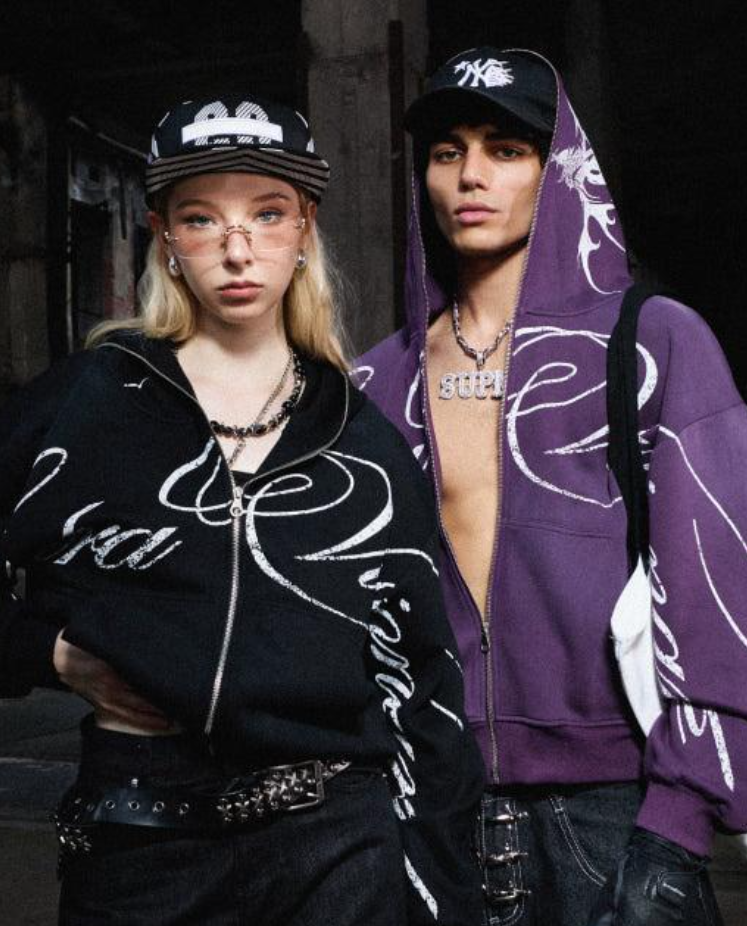
1. Supermade
Streetwear Brands Independent. 1,746 pieces in the catalogue, roughly $13 to $130, most of it $45 to $80. Baggy jeans, graphic tees, hooded sweatshirts, work jackets.
First on one criterion only. The whole wardrobe is buyable today at one price band with no drop, no raffle and no resale premium.
2. Supreme
New York, 1994, James Jebbia. Box logo tees and hoodies, Thursday drops.
Carlyle Group put $500 million in during 2017. VF paid about $2.1 billion in December 2020. VF’s own closing announcement dates the sale to EssilorLuxottica, the eyewear group behind Ray-Ban, to 2 October 2024 at $1.5 billion in cash. A $600 million comedown in four years, on a business that was still growing.
3. Stüssy
Laguna Beach, 1980, Shawn Stussy. Tees, hoodies, workwear-cut jackets, $60 to $200.
Forty-five years of trading and still privately held. It is the only brand here that has never been sold.
4. Corteiz
London, 2017, Clint Ogbenna. Cargos, tracksuits, the Alcatraz hoodie, Nike collaborations.
Independent, and the youngest label on this list with no outside money. Password-gated releases and location drops instead of ordinary e-commerce.
5. Carhartt WIP
Carhartt, Detroit, 1889. Work In Progress is the European line, 1994.
The Detroit jacket in 12 oz duck canvas, corduroy collar, blanket lining. Double-knee trousers with a second layer across the front. $150 to $300, and the price barely moves, because the pattern is not seasonal.
6. BAPE
Tokyo, 1993, Nigo. The Shark hoodie, camo, the Bapesta.
Nigo sold 90 percent of parent company Nowhere Co. to Hong Kong’s I.T Group in 2011, reported at around $2.8 million, and left in 2013. Put that beside Supreme’s $1.5 billion. Japanese sizing runs small, so size up one.
7. Fear of God Essentials
Los Angeles, 2013, Jerry Lorenzo. Essentials is the diffusion line.
Boxy loopback hoodies with a rubberized logo strip, $90 to $170, stocked in volume rather than dropped. The main line runs into four figures.
8. Aimé Leon Dore
New York, 2014, Teddy Santis. Knitwear, tailored sweats, New Balance collaborations.
LVMH Luxury Ventures took a minority stake in 2022. Santis has run New Balance’s Made in USA line since 2021.
9. Denim Tears
2019, Tremaine Emory. The cotton wreath on sweats, denim and Converse.
The graphic references American slavery and the cotton economy directly. Emory was creative director of Supreme and left publicly in 2023.
10. Off-White
2013, Virgil Abloh. Quotation marks, diagonal stripes, the Industrial Belt.
LVMH took 60 percent in July 2021. Abloh died that November. LVMH sold the brand on to Bluestar Alliance in September 2024, a management company that also runs Bebe, Hurley and Limited Too.
Nearly Made It
Palace, London, 2009, Lev Tanju. Self-owned, the Tri-Ferg logo, and the strongest skate video output of any brand here. It is a defensible substitute for anything in the bottom half of this list.
Kith, New York, 2011, Ronnie Fieg. Closer to a retailer that built a house label than to a streetwear brand, which is why it sits outside rather than inside.
Resale value is left out on purpose. It measures scarcity rather than the garment, and a brand can carry high premiums while the clothes get worse.
What the Ownership Column Shows
Three of the largest names changed hands between 2021 and 2024. Two went to buyers outside fashion entirely. One sold for less than it cost.
The two that have never sold are the oldest and the youngest, Stüssy at forty-five years and Corteiz at seven. Both still control their own distribution.
A brand inside a conglomerate keeps making what sells, which is usually the logo. A brand that owns itself can change the product. Neither is better, and the ownership line tells you which bet you are making.
