
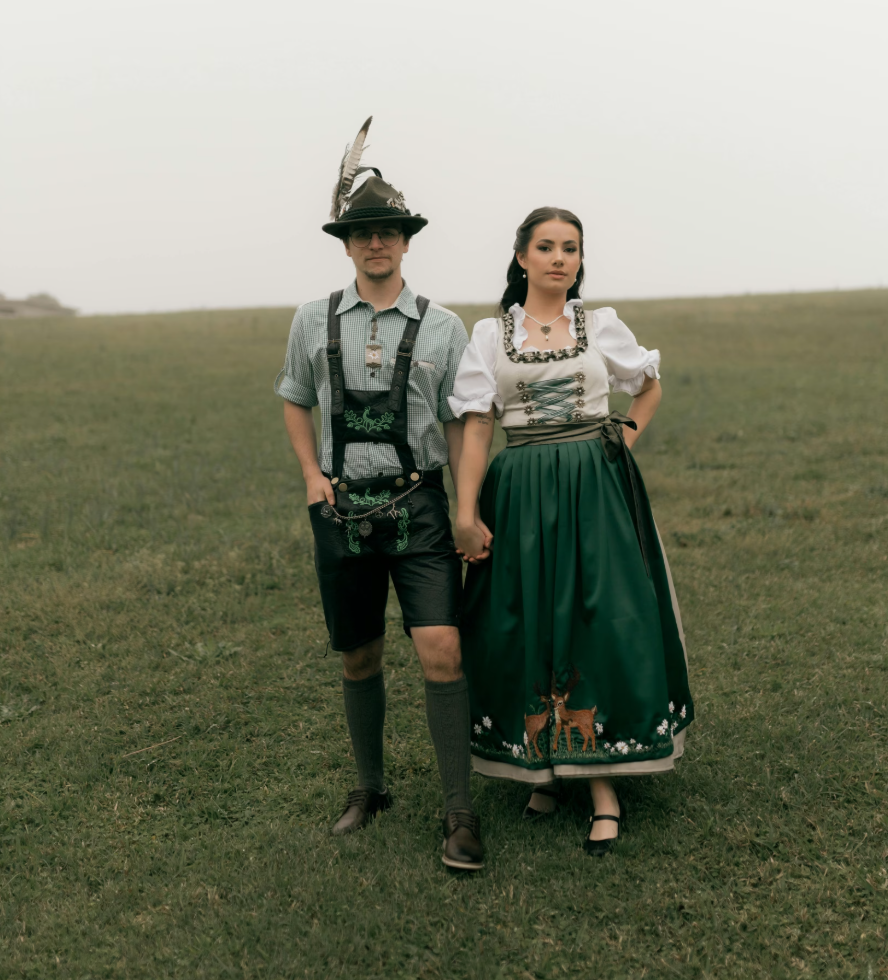
Walk into any Oktoberfest celebration whether in Munich, New York, Tokyo, or Sydney, and you’ll notice something striking: the sea of Lederhosen and Dirndls is, no longer made up of just Germans. People from every corner of the world are embracing authentic Bavarian clothing, and not just for one weekend a year. Traditional German clothes have been quietly stepping out of the festival tent and into the global fashion conversation. So what’s driving this remarkable revival?
What Is Trachten, Exactly?
Before exploring why it’s trending, it helps to understand what Trachten actually means. The word derives from the Old High German tragen, meaning “what is worn,” and it refers to the entire system of traditional German regional clothing. Bavarian Tracht, the most internationally recognized form, includes Lederhosen (leather breeches) for men, the iconic Dirndl dress for women, along with accessories like embroidered suspenders, wool hats, charivari chains, and Trachten jackets made from loden wool.
These aren’t just costumes. Each piece is, steeped in centuries of regional identity, craftsmanship, and symbolism. Lederhosen, for instance, originated as practical workwear for farmers and Alpine laborers as far back as the 16th century. The Dirndl began as a humble servant’s dress before being elevated to a symbol of Bavarian femininity in the 19th century. Together, they evolved into what we now recognize as authentic Bavarian clothing – garments that speak the language of heritage.
A Fashion Renaissance Rooted in History
Trachten’s rise to global recognition didn’t happen overnight. The pivotal moment came in the 19th century, when King Ludwig II of Bavaria actively championed traditional clothing as a way to strengthen Bavarian identity following the Napoleonic Wars. Oktoberfest, which began in 1810 to celebrate a royal wedding, helped cement lederhosen and dirndls as festive attire worthy of royalty – quite literally lifting them from peasant wear to cultural pride.
After a mid-20th century dip in popularity, the 1960s and 1970s hippie movement sparked a renewed appreciation for folk culture and traditional garments. Bavarian Tracht became fashionable beyond Bavaria for the first time, earning international recognition as part of a broader desire to reconnect with authentic, handcrafted aesthetics.
The most significant revival, however, has come in the 21st century. By 2013, it had become standard for young Bavarians to own at least one set of traditional clothing, and leading fashion designers began paying close attention. Vivienne Westwood famously praised the Dirndl at an Austrian fashion event, calling it a timeless garment that had been underappreciated. She and her husband were, subsequently honored as “Ambassadors for Tracht” in 2010.
Why the World Is Falling in Love with Traditional German Clothes
Several powerful forces are converging to make authentic Bavarian clothing appealing far beyond its Alpine origins.
The Global Reach of Oktoberfest Culture
Oktoberfest is, no longer just a Munich event – it’s a worldwide phenomenon held in cities across America, Asia, and Australia. As these celebrations grow, so does the appetite for authentic German costumes. Attendees increasingly want the genuine article rather than cheap imitations, fueling demand for quality Trachten that reflects real Bavarian culture.
The Slow Fashion Movement
In an era dominated by fast fashion and disposable trends, traditional German clothing stands as a powerful counter-statement. Lederhosen and Dirndls are, built to last for decades. Made from natural materials like goatskin leather, loden wool, organic cotton, and linen, they are designed to be, repaired, altered, and passed down through generations as family heirlooms – the very definition of slow fashion before the term existed. Analysts project that Germany’s ethnic wear market will reach approximately $3.5 billion by 2030, growing at a compound annual rate of 5.7%, reflecting this sustained global demand.
Sustainability as a Core Value
Closely linked to slow fashion is the sustainability movement. Today’s environmentally conscious consumer is, drawn to Trachten precisely because it aligns with values of ethical production and natural materials. Authentic Trachten uses no synthetic fabrics, relies on organic materials like wool, cotton, and hemp, and is, produced by skilled artisans using traditional methods. Some forward-thinking brands are even introducing vegan leather lederhosen and eco-friendly dirndl fabrics to meet modern demand without compromising on the authentic spirit of the garments.
High Fashion’s Stamp of Approval
Major designers have incorporated Dirndl-inspired silhouettes and Trachten elements into their collections, with houses like Dolce & Gabbana drawing from Bavarian aesthetics. This high-fashion endorsement has helped reframe traditional German clothes not as regional novelties but as sophisticated, globally relevant fashion. Modern designers blend classic embroidery, horn buttons, and loden fabrics with contemporary cuts and sustainable materials creating pieces that work at Oktoberfest, at weddings, and even in business casual settings.
Celebrity Influence
When public figures are, photographed in Trachten, global audiences take notice. Celebrities attending Oktoberfest in authentic Bavarian clothing have helped push the trend into mainstream fashion consciousness, making it aspirational for international audiences who may have never set foot in Bavaria.
What Makes Authentic Bavarian Clothing Different
Not all lederhosen and dirndls are, created equal, and discerning consumers worldwide are learning to tell the difference. Authentic Bavarian clothing is, distinguished by its materials and craftsmanship. Genuine lederhosen are, made from deer, goat, or cowhide leather – materials that soften and mold to the wearer’s body over time, developing a unique patina that factory-produced replicas can never replicate. Authentic dirndls feature hand-embroidered details, quality cotton or linen blouses, and carefully constructed bodices that reflect regional traditions.
The Bayerische Trachtenverband (Bavarian Folk Costume Association) actively promotes and protects traditional designs, recognizing six official types of Alpine Tracht in Bavaria – each with distinct patterns, colors, and regional significance. This level of cultural guardianship ensures that authentic Bavarian clothing retains its integrity even as its international profile grows.
Trachten Beyond the Festival Tent
Perhaps the most telling sign of Trachten’s global rise is, how it’s being worn outside of festivals. Modern Trachten is appearing at weddings, baptisms, church celebrations, business functions, and even on city streets styled with sneakers or contemporary accessories. Designers are also making the category more inclusive, with gender-neutral styles and diverse representations of who gets to wear and celebrate Bavarian heritage.
For the growing community of German diaspora around the world, traditional German clothes serve as a meaningful connection to roots and identity. For those with no German heritage at all, they represent an invitation into a rich cultural story built on craftsmanship, community, and pride.
The Takeaway
Authentic Bavarian clothing is gaining global popularity because it offers something rare in today’s fashion landscape: genuine meaning. These are, garments with history woven into every stitch, made to last a lifetime, and rooted in values of craftsmanship, sustainability, and cultural identity, that resonate across borders.
Whether you’re, drawn to traditional German clothes for their aesthetic beauty, their sustainability credentials, or the simple joy of wearing something with a centuries-old story, one thing is clear: Trachten has outgrown its Alpine origins and found a worldwide audience that shows no signs of shrinking.
