
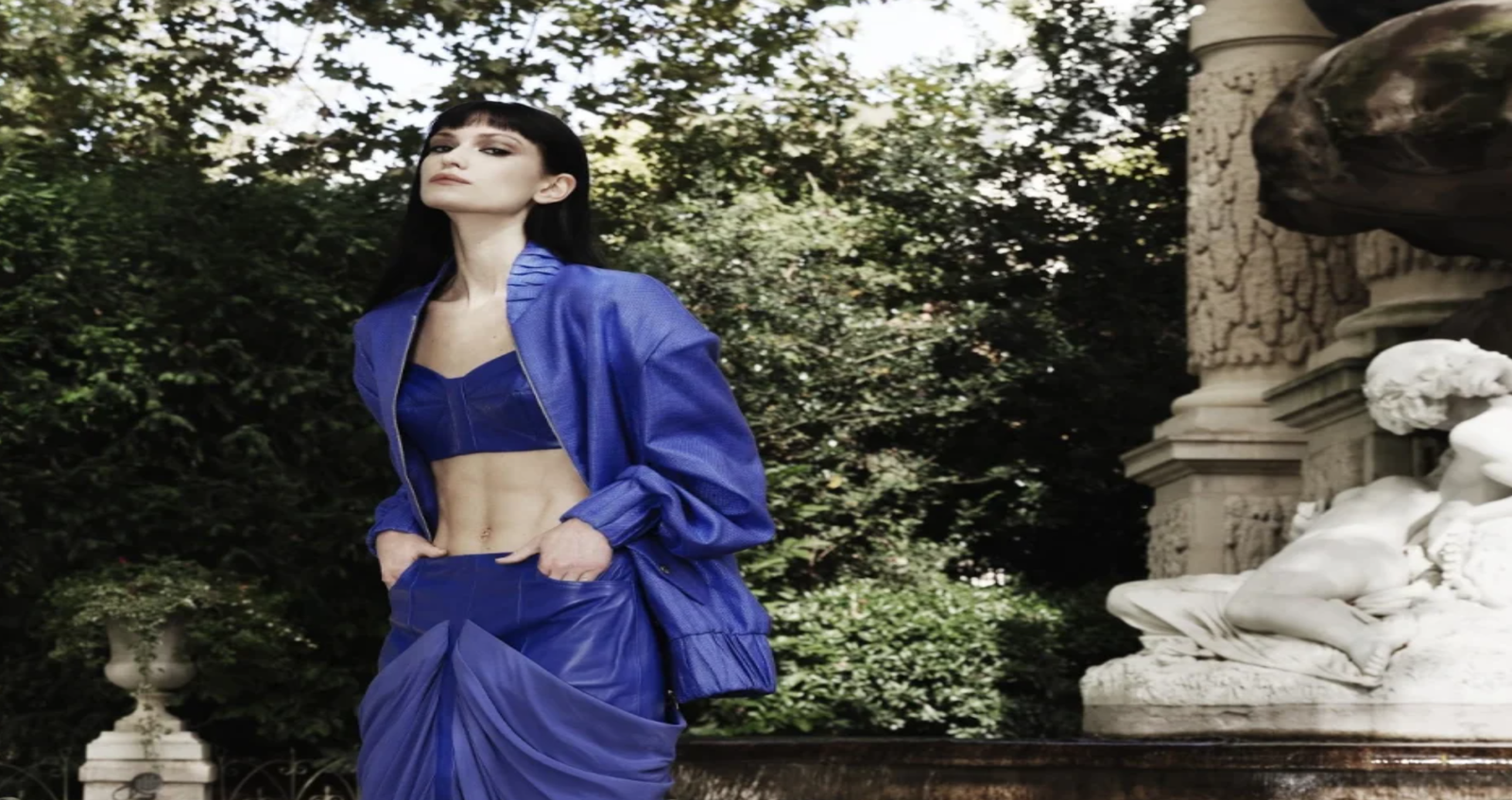
Four data points predict whether an online luxury purchase will work: published garment measurements, fabric composition and weight, construction detail, and the return window. Fit and sizing cause roughly half of all apparel returns. Price is a weak predictor of durability, and WRAP’s Durability Accelerator testing found fibre composition and fabric weight equally unreliable.
Buying luxury clothes online succeeds or fails on verification. Four things on a product page predict a successful purchase: garment measurements, fabric composition and weight, construction and lining detail, and the return window. Apparel returns run 20–40% of orders against an ecommerce average near 20%, and fit is the largest single cause. Shoppers who buy luxury clothes online from retailers publishing all four rarely end up in that statistic — and the checking itself slows the purchase to the speed at which good decisions get made.
Why do so many online clothing purchases fail?
Because shoppers guess. Fit and sizing are the single largest cause of apparel returns, responsible for around half of them, followed by a mismatch between the item and its description — colour reading differently, fabric feeling cheaper, or the cut hanging differently than in the photo.
The scale is category-wide. Ecommerce return benchmarks for 2026 put apparel in a 20–40% band against an all-category average near 20%, and dresses regularly exceed 50% in Western markets. Bracketing — ordering several sizes intending to return most — is now mainstream behaviour.
It works, in the narrow sense that something usually fits. But it treats clothing as disposable and the wardrobe as a process of elimination, which is the opposite of how a considered wardrobe gets built.
Does a higher price guarantee better quality?
No — and this is the finding most worth internalising before spending at the premium end. WRAP’s Durability Accelerator Initiative benchmarked more than 200 products across 10 categories from 25 UK brands, in partnership with the University of Leeds, through repeated wash-and-wear testing. The results contradicted the industry’s working assumptions.
Mark Sumner, Textiles Programme Lead, WRAP: the study found that “higher prices, fibre composition and fabric weight are no guarantee” of a more durable product. Lightweight fabrics outperformed heavier ones in several categories, and synthetic blends did not consistently beat natural fibres.
WRAP announced the international expansion of the programme to North America and the EU in October 2025, after the UK pilot produced these results. What the testing did point to was construction — the unglamorous half of garment-making. Seams finished cleanly on the inside. Reinforcement where a waistband takes strain. A lining cut to travel with the outer fabric as it moves. All of it sits below the level a photograph or a logo can reach. It is simply what separates a garment that holds its shape from one that quietly gives up after a season.
What should you check on a product page before buying?
Four checks, ordered by how often they prevent a poor purchase.
| Check | What to look for | Why it matters |
|---|---|---|
| Garment measurements | Bust, waist, hip and length in cm for your size | Sizing varies between brands; a chart in centimetres is the only usable size guide |
| Fabric composition and weight | Full fibre percentages; GSM where published | Determines drape, opacity and breathability; retailers who publish it in full tend to disclose the rest as well |
| Construction and lining | Seam finish, lining fibre and attachment, closure type | Interior finishing is where cost is cut first and photographed least — and where WRAP’s testing located actual durability |
| Return window | Days allowed, who pays return shipping, condition terms | Defines your actual exposure if the first three checks turn out wrong |
A retailer publishing all four is inviting comparison. A retailer publishing none is asking you to buy on impression — which is precisely the transaction that produces the return rates above.

How do you choose a size without trying it on?
Measure yourself and compare against the brand’s published centimetres. Your habitual size is a guess in an unfamiliar brand: sizing standards vary between labels, so a “medium” at one label can fit like a “large” at another.
Two decisions narrow it further. First, the fit you want: structured fabrics feel firmer and less forgiving than fluid ones, so sizing between two options is a different judgement in wool than in viscose. Second, the measurement that actually governs the garment — shoulder width for shirts and jackets, waist and hip for skirts, bust and length for dresses. Get the governing measurement right and the rest tends to follow.
How do you know whether a piece is worth the price?
Divide price by realistic wear count. The table below states its own assumptions and works as a method you can rerun with your own numbers.
| Budget piece | Investment piece | |
|---|---|---|
| Purchase price | €120 | €420 |
| Wears before retirement | 25 | 200 |
| Ownership period | 18 months | 5 years |
| Cost per wear | €4.80 | €2.10 |
Wear count decides this figure; price only sets the starting number. A garment worn twice is expensive at any price point, which is why versatility belongs in the purchase decision alongside construction.
There is a gap worth knowing about here. WRAP reported in October 2025 that current durability testing thresholds assume garments will withstand 15 to 20 wash cycles, while consumers expect closer to 50. The standard a garment is tested against, in other words, may be well below the standard you are buying it for. Asking how a piece is constructed is the one way to close that gap yourself.
How has buying luxury online changed in 2026?
It has become a research process. In the Bain-Altagamma Luxury Goods Worldwide Market Study update published on 25 June 2026, roughly half of luxury consumers reported already using AI tools somewhere in the purchase journey — around one in four to discover brands and products, and two in three to compare options before committing. Nearly all of them intend to continue.
The same study found that around half of luxury consumers now consult the secondhand market before buying anything new. Resale has shifted from a disposal channel to a reference point for what a garment is actually worth over time.
Both behaviours reward the same thing: published specification. A garment described in measurements, fibre percentages and construction detail can be compared, researched and valued. One described only in adjectives leaves the shopper guessing.
FAQ
Is it safe to buy expensive clothing without trying it on?
Yes, if the retailer publishes garment measurements in centimetres and you compare them against your own. Fit drives around half of apparel returns, and most of that is preventable by measuring first.
Does fabric weight tell you if a garment will last?
No. WRAP’s Durability Accelerator testing found fabric weight and fibre composition both unreliable as predictors of garment lifespan, and lightweight fabrics sometimes outperformed heavier ones. Construction quality matters more than material specification alone.
How many washes should a good garment survive?
More than current standards assume. WRAP reported in 2025 that testing thresholds are set at 15 to 20 wash cycles while consumer expectations sit near 50 — a gap the industry is still working to close.
What return window is reasonable for luxury clothing?
At least 14 days, with clearly stated conditions and explicit information on who pays return shipping. Clarity of terms matters more than window length.
What does GSM mean?
Grams per square metre — a measure of fabric weight. Higher GSM indicates denser fabric, though WRAP’s testing showed density alone to be a poor predictor of durability.
Buying well is a form of restraint
The checks above amount to a single shift in posture: from acquiring to selecting. A wardrobe assembled through bracketing and impulse tends toward volume and fragmentation. One assembled through measurement, disclosure and cost per wear tends toward fewer pieces that work together, and that combine easily, because they were chosen against the same standard.
This is the logic behind brands built on limited collections and considered construction. SAGIO works within that approach: minimalist womenswear designed for real schedules, where the value of a garment is measured by how often it can be worn.
Sources
- WRAP — Durability Accelerator Initiative, international expansion (October 2025)
- WRAP — Extending Product Lifetimes: work on clothing durability
- Bain & Company and Altagamma — Luxury Goods Worldwide Market Study, spring update (25 June 2026)
- Bain & Company — Finding a New Longevity for Luxury (2026)
